
IT Asset Management (ITAM)
IT Asset Tracking, Inventory Management, and Asset Visibility
Eracent’s AI-enabled IT Asset Management (ITAM) platform provides complete visibility into hardware, software, SaaS, and cloud assets, helping organizations track usage, control costs, improve compliance, and manage assets efficiently across the entire IT environment.
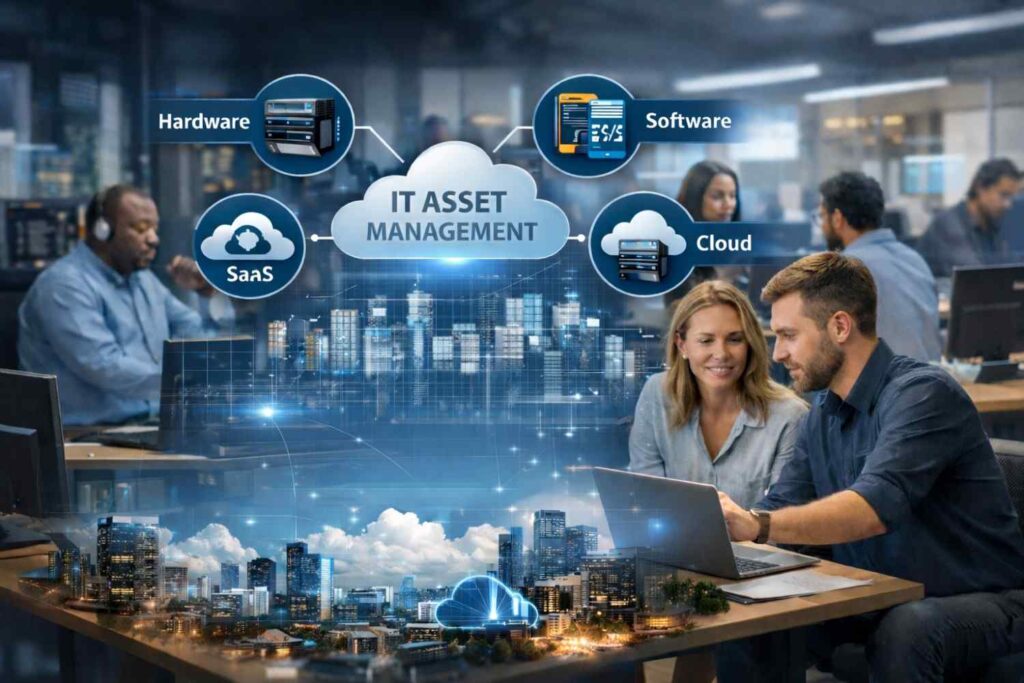
Intelligent IT Asset Management for Complete Visibility and Control
Eracent’s IT Asset Management (ITAM) platform provides organizations with the ability to discover, track, and manage all technology assets across the enterprise. From hardware and software to SaaS applications and cloud resources, the platform delivers a centralized view of the entire IT environment. Modern organizations rely on a wide range of digital assets to operate efficiently. Without effective IT asset tracking and inventory management, businesses face increased operational costs, compliance risks, and limited visibility into their technology ecosystem. Eracent helps organizations implement a structured IT Asset Management strategy that improves governance, reduces costs, and ensures every IT asset contributes measurable value.
Complete Visibility Across the IT Environment
Discover, Track, and Manage Every Asset
Enterprise technology environments are increasingly complex, spanning on-premise infrastructure, remote endpoints, cloud platforms, and SaaS applications. Managing these assets across multiple tools often leads to fragmented data and limited control. Eracent’s IT asset discovery and inventory management solution automatically identifies assets across the network and consolidates them into a unified inventory. This enables organizations to maintain accurate asset records and make better technology decisions.
With centralized IT Asset Management software, organizations can:
- Maintain a real-time IT asset inventory across hardware, software, SaaS, and cloud environments
- Implement reliable IT asset tracking and configuration management
- Monitor software license usage and entitlement compliance
- Detect shadow IT applications and unauthorized software installations
- Optimize IT asset lifecycle and technology investments
Core Capabilities of IT Asset Management
Automated Asset Discovery
Centralized Asset Inventory
Software Asset Management
SaaS and Cloud Asset Visibility
Asset Tracking & Configuration
Reporting and Analytics
Why IT Asset Management Matters
Organizations that lack a structured IT Asset Management framework often struggle with limited visibility and uncontrolled technology spending.
Common challenges include:
- Incomplete or outdated IT asset inventories
- Excess software purchases due to poor license visibility
- Security risks from unmanaged devices or unauthorized software
- Compliance issues during vendor license audits
- Difficulty linking IT investments to business outcomes
Business Benefits of IT Asset Management
Reduce IT Costs
Optimize technology spending by eliminating redundant purchases, reclaiming unused software licenses, and improving asset utilization.
Strengthen Security and Risk Management
Comprehensive asset visibility and device tracking helps identify outdated systems, unsupported software, and unmanaged devices that may introduce vulnerabilities.
Improve License Compliance
Maintain accurate software license tracking and entitlement records, ensuring readiness for vendor audits and regulatory requirements, with effective Software License Management.
Increase Operational Efficiency
Centralized asset data simplifies IT operations, improves service management, and enables faster issue resolution.
Enable Strategic Decision-Making
Detailed asset insights support technology planning, upgrade strategies, and digital transformation initiatives.
AI-Driven IT Asset Intelligence
Eracent enhances traditional IT Asset Management systems with advanced analytics and artificial intelligence.
Intelligent Asset Discovery
AI-powered discovery automatically detects hardware, software, SaaS, and cloud assets across distributed environments.
Data Normalization
Machine learning standardizes asset data from multiple sources to ensure consistent and reliable inventory records.
Usage-Based Optimization
Analyze software usage trends to identify underutilized licenses and optimize software investments.
Predictive Asset Insights
Predict asset lifecycle events, license renewals, and support timelines with predictive analytics, supported by IT Asset Lifecycle Management.
Continuous Compliance Monitoring
Automatically compare software entitlements with real usage to maintain compliance and reduce audit risk.
Build a Smarter IT Asset Strategy
Technology environments continue to grow in scale and complexity. Organizations require intelligent solutions that provide real-time visibility, automation, and data-driven insights across the IT ecosystem. Eracent’s IT Asset Management platform enables organizations to discover, track, and optimize assets across hardware, software, SaaS, and cloud environments helping IT teams operate more efficiently while supporting business growth.
FAQs : IT Asset Management
IT Asset Management (ITAM) is the process of discovering, tracking, and managing hardware, software, SaaS, and cloud assets across an organization.
IT Asset Management improves visibility, reduces IT costs, supports license compliance, and helps organizations manage technology assets efficiently.
ITAM manages hardware devices, software applications, SaaS tools, cloud resources, and network infrastructure.
ITAM focuses on tracking and managing assets, while IT Asset Lifecycle Management manages assets from acquisition to retirement.
ITAM reduces costs by identifying unused software licenses, preventing duplicate purchases, and optimizing asset usage.
ITAM helps identify unmanaged devices, outdated systems, and unauthorized software that may create security risks.
IT asset discovery automatically identifies devices, software, and cloud services across the network to build an accurate IT asset inventory.
Typical features include asset discovery, IT asset tracking, inventory management, license management, and asset reporting.
