IT Asset Lifecycle Management
Strategic Value from IT Assets
IT assets help companies run smoothly, innovate, and stay competitive, and IT Asset Lifecycle Management (ITALM) helps manage them from start to finish. When used well, ITALM turns technology from a costly challenge into a valuable business asset.
Understanding IT Asset Lifecycle Management
Defining IT Asset Lifecycle Management
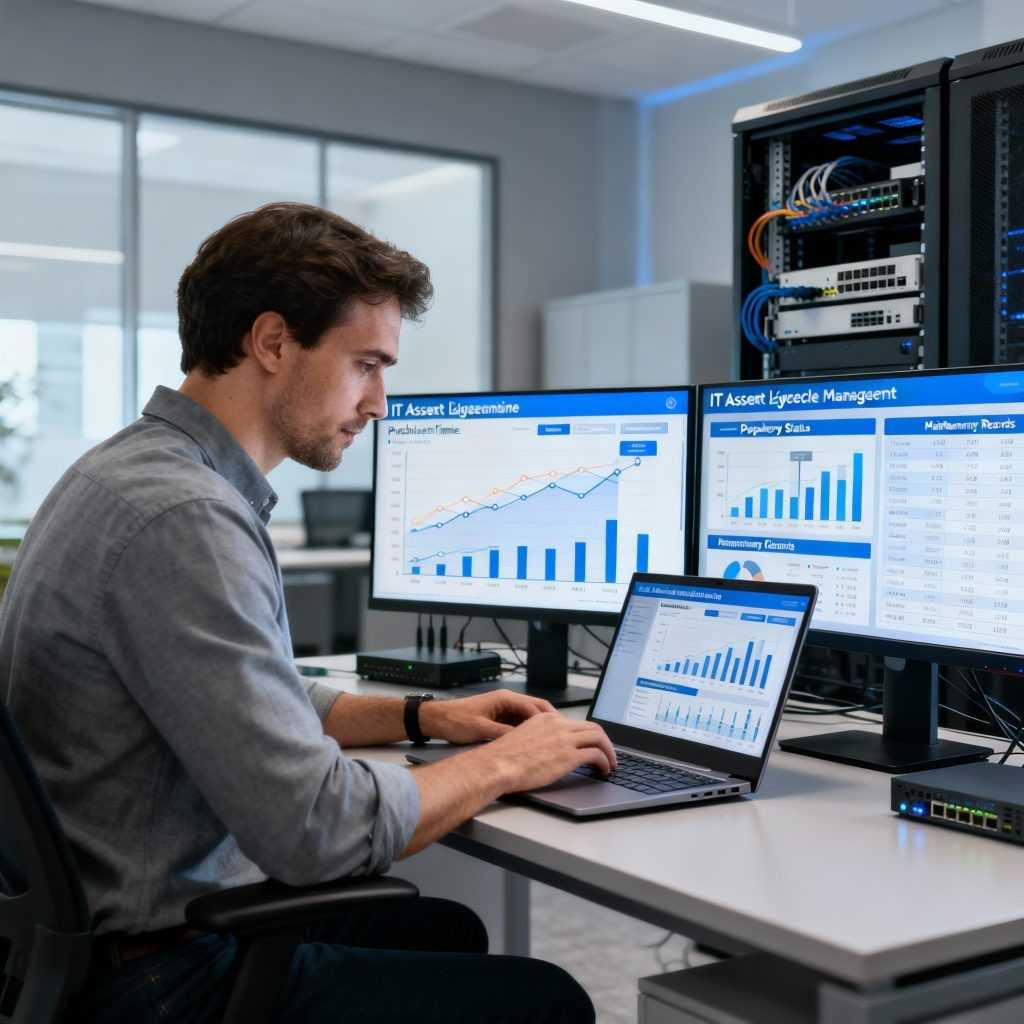
IT Asset Lifecycle Management is a comprehensive business practice that combines financial, inventory, contractual, and risk management disciplines to support the lifecycle management of IT assets. These assets include hardware (servers, computers, mobile devices, network equipment), software (applications, operating systems, licenses), and increasingly, cloud-based services and subscriptions.
The fundamental purpose of ITALM is to provide organizations with complete visibility and control over their IT assets, enabling informed decision-making that aligns technology investments with business objectives. Rather than treating IT assets as isolated purchases, ITALM approaches them as strategic resources that require careful stewardship throughout their entire useful life.
The Five Critical Phases of IT Asset Lifecycle
Executive Summary
In today’s digital-first business landscape, Information Technology assets form the critical infrastructure that powers organizational operations, drives innovation, and creates competitive advantage. IT Asset Lifecycle Management (ITALM) represents a systematic approach to managing these valuable resources from procurement through disposition. .
In today’s digital-first business landscape, Information Technology assets form the critical infrastructure that powers organizational operations, drives innovation, and creates competitive advantage. IT Asset Lifecycle Management (ITALM) represents a systematic approach to managing these valuable resources from procurement through disposition. .
1. Planning and Procurement
This initial phase involves strategic assessment of organizational needs, budgeting, vendor evaluation, and acquisition of assets that align with both technical requirements and business objectives. Key activities include:
- Conducting needs analysis and requirements gathering
- Performing total cost of ownership (TCO) analysis
- Evaluating vendor proposals and negotiating contracts
- Establishing standardized configurations
- Ensuring alignment with IT strategy and architecture standards
2. Deployment
During this phase, assets are systematically installed, configured, and distributed to end-users. Proper deployment ensures assets are integrated seamlessly with existing systems and processes. Critical steps include:
- Receiving and recording assets in the inventory system
- Configuring according to organizational standards
- Installing necessary software and security controls
- Assigning to users with appropriate documentation
- Updating asset management databases with location and ownership details
3. Maintenance and Management
This ongoing phase represents the operational period where assets deliver value to the organization. Comprehensive management ensures optimal performance, security, and utilization. Essential activities include:
- Monitoring performance and utilization metrics
- Applying security patches and software updates
- Managing software licenses and subscriptions
- Handling repairs and warranty claims
- Tracking changes and modifications
- Conducting regular audits and compliance checks
4. Retirement
When assets approach end-of-life or become obsolete, proper retirement procedures ensure secure decommissioning while preserving data integrity. This phase involves:
- Assessing assets for refresh or replacement
- Securely migrating or archiving data
- Revoking access and reallocating licenses
- Performing data sanitization following security protocols
- Updating asset records to reflect retirement status
5. Disposal and Replacement
The final phase addresses environmentally responsible disposal while planning for replacement assets. Key considerations include:
- Determining optimal disposal method (resale, recycling, donation)
- Ensuring compliance with environmental regulations
- Securing data destruction certification
- Transferring lessons learned to procurement of replacement assets
- Updating financial records and depreciation schedules
Eracent’s IT Asset Lifecycle Management (ITALM) Solutions
ITMC Lifecycle™ – Provides comprehensive lifecycle asset management for all assets and licenses, providing continuous tracking from planning and acquisition through refresh and disposition.
Authorized Product Catalog – ITMC Lifecycle is based on a catalog of authorized hardware and software products that have been approved for use. This catalog provides control over products that enter your IT environment since it supports request and approval processes. The catalog offers tracking of Makes, Models, Publishers, Applications, Part Numbers, and Categories, as well as links to all assets and licenses that are derived from each catalog item.
Purchase Transaction Tracking – Tracking mirrors the Purchase Order and Line Item format used in real-world procurement activities. Details include:
- P.O. Number, Vendor, P.O. Status and Purchase Date
- Line Items with costs and taxes, Cost Center, Project and GL Code cost allocations, and much more.
Comprehensive Asset and License Tracking – Provides the ability to manage each uniquely identifiable asset or license, or groups of licenses or components that may be tracked together. Asset records may be created automatically using vendor feeds, even before the assets or licenses are physically in your possession.
Attributes tracked for assets and licenses include:
- Unique identifiers like serial numbers, asset tags, license keys and more.
- Current lifecycle status (e.g., Reserved, In Use, In Storage, Disposed, etc.).
- Chargeback cost center(s).
- Assigned physical locations in a detailed hierarchy (e.g., floor, room, rack, shelf, etc.).
- Ownership type (e.g., owned, leased, on loan, subscription, etc.).
- Asset function (e.g., production, development lab, application system, etc.).
- Links to catalog items, related assets, users, contracts, P.O. details and much more.Item.

Contract Management
Contracts and License Agreements are a critical element of lifecycle management, as there are often potential financial consequences based on time factors (e.g., renewals or lease-end returns) or violating terms of use (e.g., license compliance and use rights). ITMC Lifecycle supports detailed tracking of contracts and agreements, including:
- Contract Types and Subtypes with the unique attributes, terms and conditions that should be tracked for each type/subtype.
- Contract Names or Numbers and Status (In Draft, Executed, Terminated, etc.).
- Vendor and Start and End dates (perpetual agreements can also be indicated).
- Associated people, and physical and digital contract locations.
Contracts can be linked to assets, catalog items, purchase records, employees and more. Automated alerts and notifications can be sent based on dates and many other contract attributes to ensure that important renewal or cancellation dates are not missed.
Financial Tracking – Provides tracking of financial details from multiple perspectives, supporting True Cost of Ownership (TCO) calculations and other financial analysis and reporting.
Costs, payments, chargebacks and depreciation may be tracked directly against an individual asset, license, or agreement. These may be one-time or recurring payments. Costs may be tracked in multiple currencies for global organizations. A cost center hierarchy enables rollup reporting from an organizational overview to the most granular department-level query.
Hardware Reconciliation – While software license reconciliation is accomplished via the Continuous License Reconciliation (CLR) modules, ITMC Lifecycle also supports hardware reconciliation. Hardware details from ITMC Discovery™ and other tools can be uploaded to a staging table where they are matched to hardware assets in the lifecycle repository. It is possible to see:
- Hardware that was acquired but is not being discovered.
- Hardware that was discovered but for which no ownership record exists in ITMC Lifecycle.
- Configuration, user and location elements that do not match between the ownership and discovery views.
Hardware Asset Disposition
Since asset disposition activities can have significant financial and legal implications, proper tracking is essential. ITMC Lifecycle provides strong capabilities in this area – no other SAM, ITSM or discovery tool can offer comparable end-of-life tracking and management
Important elements tracked include:
- Disposition method (e.g., sold, auctioned, donated, etc.).
- Disposal date.
- Any third-party vendors who are involved.
- Fees incurred or value recovered from a sale.
- Hard Drive wiping details (who, when, method) to ensure data security.
- Uploads of legal documentation (ownership transfer, certificates of sale or destruction, etc.).
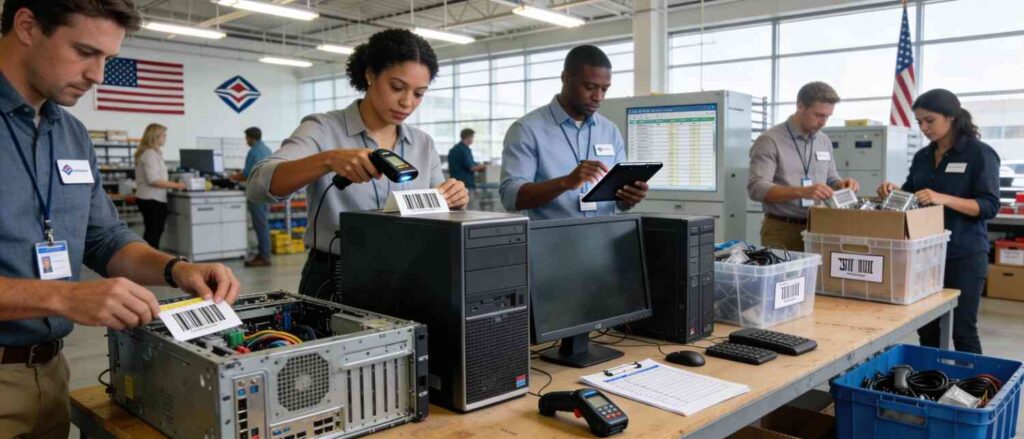
Reports can show all software installed on hardware that is staged for disposal, helping to determine which licenses can be reclaimed for re-use. The flexible API enables data to be shared with any disposition management providers and tools.
Alerts and Notifications
ITMC Lifecycle provides very flexible alerts and notifications based on numerous conditions to ensure that activities are completed and critical deadlines are met.
Conclusion: ITALM as a Business Imperative
IT Asset Lifecycle Management has evolved from a technical discipline to a strategic business practice that directly impacts organizational performance, resilience, and competitive positioning. In an era where technology permeates every business function, the ability to effectively manage IT assets throughout their lifecycle is no longer optional—it is essential for sustainable success. Organizations that implement comprehensive ITALM programs position themselves to maximize the value of technology investments while minimizing associated risks and costs. The benefits extend far beyond simple inventory control to encompass financial optimization, operational excellence, security enhancement, and strategic alignment. The journey to effective IT asset management requires commitment, cross-functional collaboration, and ongoing refinement. However, the returns—measured in both tangible cost savings and intangible competitive advantages—make this investment one of the most valuable initiatives an organization can undertake in today’s digital economy. By embracing IT Asset Lifecycle Management as a core business capability, organizations transform their approach to technology from reactive cost center to strategic enabler, creating a foundation for innovation, growth, and long-term success in an increasingly digital world.
